


Gonarthrosis, or deforming arthrosis of the knee joint, is a degenerative-dystrophic disease in the hyaline cartilage of the knee, covering the condyles of the tibia and femur.
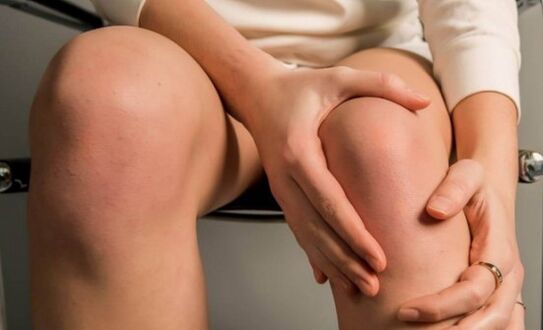
The symptoms of arthrosis of the knee joint develop over the years, gradually, and the main manifestation of the disease is stiffness of movement and pain.Among arthrosis of other joints (finger phalanges, shoulder and elbow joints, hip joints), gonarthrosis is the most common disease.
The population category most susceptible to knee arthrosis are women, as well as people over 40 years old.In some cases, gonarthrosis can develop in athletes (from increased stress) and in young people (on the background of previous injuries).
Causes of gonarthrosis
Osteoarthritis of the knee joint does not develop from a single cause;in most cases, the development of the disease depends on a combination of several negative factors, which worsen with age and can ultimately lead to such a disorder.Medicine identifies the following mechanisms for the occurrence of arthrosis:
Primary - occurs in old age from the aging of body tissues, as well as against the background of some factors that provoke this disease (constant increase in stress, heredity, obesity).
Secondary – accounts for 30% of all cases of gonarthrosis, occurring mainly after meniscus damage, ligament rupture, tibia fracture and other injuries.In most cases, the symptoms of knee arthrosis begin to appear after 3-4 years.However, if the injury is severe enough, it may take 2-3 months for symptoms to appear.
About 7-8% of cases of arthrosis of the knee joint occur when, after forty years, a person begins to actively engage in physical exercises, namely squats and running.But due to age, the weakening of the tone of the tissues of the knee joint and the characteristic age-related changes under sudden loads can provoke the appearance of rapid degenerative and dystrophic changes in the joint.
Another reason for the development of gonarthrosis in a person can be concomitant diseases - varicose veins, excess weight, ankylosing spondylitis, gout, psoriatic, rheumatoid or reactive arthritis.
Continuous critical loads on the knees, regular long-term climbing of stairs in old age or lifting weights, as well as professional sports can lead to arthrosis of the knee joint.The risk of arthrosis of the knee joint increases significantly with the weakness of the ligamentous apparatus caused by genetics, diabetes mellitus and other metabolic disorders, neurological diseases and spinal cord injuries.
Spasm of the muscles of the front of the thigh is the cause of 50-60% of cases of arthrosis of the knee joint.Such a muscle spasm may not appear for a long time before the appearance of pain in the knees, while the person may feel heaviness in the legs, fatigue and pain in the lower back.When the iliopsoas and rectus femoris muscles are in a state of constant spasm, with age this leads to "tightening" of the knees, which limits their free movement.
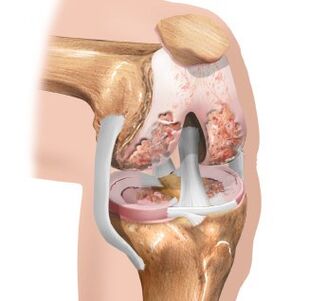
Degrees of gonarthrosis
In most cases, the development of arthrosis of the knee joint occurs in one of the knees.Medicine distinguishes 3 degrees of gonarthrosis depending on the intensity of pathological processes:
The first is that there is no deformity of the joint bones;periodic dull pain in the knee is characteristic after physical stress on the joint.A small swelling of the joint may develop, which disappears on its own after a while.
The second degree is characterized by an increase in the symptoms of arthrosis.The pain is long and intense, and appears with minimal effort (heavy lifting, walking), and a crackling noise may also appear in the joint.In the second degree of gonarthrosis, deformation of the knee joint can develop, as well as moderate limitation of movement.
The third degree – there are pronounced symptoms of arthrosis of the knee joint.Visible deformity of the joint and persistent pain lead to disturbances in the patient's gait and there is limited mobility of the joint.In the third degree of gonarthrosis, the pain can intensify depending on the weather and reach such an intensity that the patient's sleep is disturbed, the limitation of mobility is reduced to a minimum, which makes it impossible to find a comfortable position for the leg.
Diseases and pathologies with which gonarthrosis is confused
Locking of the knee joint in case of meniscus damage.
The disease develops after an unsuccessful movement, accompanied by a crack in the knee, severe pain appears, which subsides after 15 minutes, and the next day swelling of the knee appears.
Ankylosing spondylitis, gout, articular rheumatism, arthritis - psoriatic, reactive, rheumatoid.
To distinguish gonarthrosis from arthritis, it is necessary to do a general blood test.With arthritis, the test results will show the presence of an inflammatory process in the body, while with arthrosis, no changes occur in the blood test.
Inflammation of the knee tendons.
It develops in most cases in women over 40 years old, when carrying heavy objects or going down stairs.The pain is localized on the inner surface, but the movement of the knee is not limited.
Vascular pain in the knees.
The pain is characterized by symmetry and appears in both knees at the same time.Characteristic of young people during a period of accelerated bone growth, they can occur during physical activity, cooling or weather changes.To describe their condition, patients use the term "twisted knees".
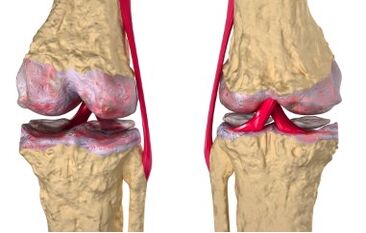
Stages of arthrosis of the knee joint
The disease is hidden because of its gradual development.Initially, the patient feels only minor discomfort, pain when moving, climbing or descending stairs.In some cases, the patient's sensations are reduced to mild joint stiffness and tightness in the popliteal region.A characteristic feature of arthrosis of the knee joint is considered to be a symptom of initial pain, which consists in the fact that after a sharp transition from a sitting position to movement, a person begins to feel pain during the first steps, which gradually disappears, only to appear again after a heavy load.
The appearance of the knee joint with the first degree of arthrosis does not differ from a healthy knee, only in some cases patients notice a slight swelling.Also, in some cases, fluid begins to accumulate in the knee joint, swells and becomes spherical, and synovitis begins to develop, which leads to a feeling of heaviness and limited movement of the joint.
Such changes in the joint in the first degree of arthrosis occur due to the breakdown of blood circulation in the small intraosseous vessels that feed the hyaline cartilage.This leads to changes in the surface of the cartilage, drying, loss of softness and the appearance of cracks.Because of this, unhindered and smooth movement between the cartilages is difficult and is accompanied by constant microtraumas when the cartilages stick to each other.Cartilage tissue, being in a constant state of microtrauma, begins to lose its shock-absorbing properties and becomes thinner.
The development of pathological processes leads to changes in bone structures.The articular area is flattened and spine-shaped growths (osteophytes) appear along the edges.The joint capsule degenerates, the joint fluid thickens and the synovial membrane shrinks.This leads to a significant deterioration of the cartilage's nutritional process and accelerates its degeneration.
As the disease progresses to the second stage, the symptoms begin to intensify, the pain appears even with light loads and is localized along the front inner side of the joint.Rest brings relief, but resuming movement causes severe pain.
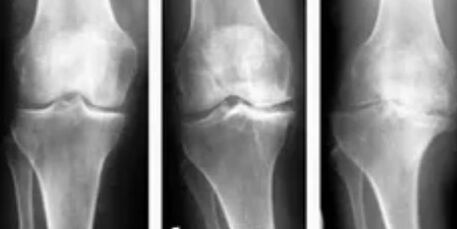
The mobility of the joint is significantly reduced, attempts to bend the leg as much as possible cause sharp pains, and a clear sharp crack is heard when moving.Synovitis is more common;the joint enlarges and changes its configuration due to a large accumulation of fluid.
The third degree of arthrosis of the knee joint is associated with significant deformation of the bones, in which they seem to be pressed into each other.There is practically no cartilage tissue, and the limitation of joint movement increases.The alignment of the joints becomes quite problematic and pain begins to bother the patient all the time, both while walking and at rest.Due to the severe deformation of the joints, the legs acquire an O- or X-shape, the gait becomes unstable, it moves and often the patient cannot do without a cane or crutches.
Diagnosis and treatment of gonarthrosis
During a routine examination, it is impossible to determine whether a patient has first degree arthrosis of the knee joint.If there is a grade 2 or 3, during the examination there is swelling, edema (with synovitis), a crackling noise is heard, stiffness of movements is observed, a change in the axis of the limbs and deformation of the joints is observed.
Today, in addition to radiography, CT and MRI methods are widely used for the diagnosis of arthrosis, thanks to which it is possible to study in more detail the disorders of bone structures and to examine pathological changes in soft tissues.
Treatment of the disease includes a complex of orthopedic procedures and drug therapy.An orthopedist prescribes mud therapy, therapeutic exercises, massage and physiotherapy.
Drug treatment includes the use of chondroprotectors, which are drugs that replace synovial fluid.In some cases, intra-articular injection of steroid hormones is performed.Patients are also recommended to undergo treatment at a sanatorium-resort.
If the treatment of a young patient with severe movement restrictions and pain is ineffective, a joint replacement method can be used, which provides for a rehabilitation period of 3-6 months.
What happens to the knee joint with osteoarthritis?
Articular cartilage plays an important role in human movement and is a smooth, elastic and stable layer, thanks to which the articulated bones move smoothly in relation to each other, and also absorbs and distributes the load during walking.
But with regular excessive loads, genetic predisposition, metabolic disorders in the body, spasms and prolonged muscle injuries, the cartilage loses its softness and begins to thin.The soft sliding of articulated bones is replaced by strong friction and the first degree of gonarthrosis develops, in which the cartilage loses its shock-absorbing properties.
The degradation process continues to progress and poor shock absorption leads to the flattening of bone surfaces with the formation of osteophytes in the form of bone growths.In this case, the disease already has a second degree and is accompanied by degeneration of the synovial membrane and the joint capsule.The lack of pumping and movement atrophies the structure of the knee joint, the consistency of the knee fluid becomes more viscous, the process of cartilage nutrition is interrupted, which leads to an even greater deterioration of the patient's condition.
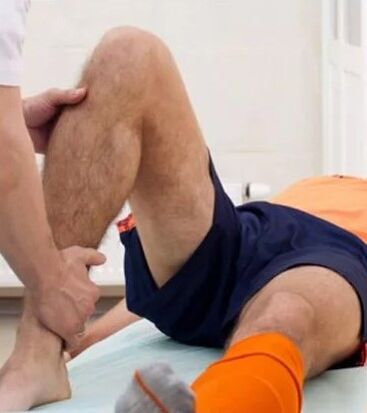
Cartilage thinning leads to a reduction in the distance between the articulated bones by up to 80%.During walking, due to abnormal friction and the lack of a shock absorber, the destructive processes in the joints increase rapidly, this quickly leads to the development of the third degree of arthrosis with pronounced symptoms:
Pain when moving, especially when going up or down stairs.
Pain both during exercise and at rest, morning stiffness.
The patient begins to limp, trying to save the injured joint.
Severe cases of the disease require the use of crutches or a cane.
The third degree of arthrosis of the knee joint is characterized by an almost complete absence of cartilage tissue, which leads to a decrease in the mobility of the joint to a minimum.Therefore, no magic method, super drugs or ointments can restore the worn cartilage tissue, and given the degree of bone deformation, the normal functioning of the joint is impossible.In this case, only surgery can help.
Gymnastics for arthrosis of the knee joint
Any treatment option for osteoarthritis of the knee joint should be performed only as prescribed by a doctor.Therapeutic gymnastics includes slow and measured exercises that exclude squats, ankle twisting and jumping.It is good to do gymnastics in the morning, sitting or lying down, for 20 minutes, repeating each exercise 10 times.
The main objectives of therapeutic exercises are to relax the muscle spasms that cause pain, increase the blood supply to the joint, slow the progression of the disease and prevent further cartilage destruction.During the period of aggravation of the disease, physical exercises are prohibited.

Lying on your back, you can perform the bicycle exercise, but you need to straighten your legs parallel to the floor, make circular movements with your legs, move your legs to the sides, sliding them alternately along the floor, strain your legs for a count of 10.
Sitting on a chair with your legs down, straighten your legs, simultaneously bending your legs and hold this position, counting up to 10, alternately pull each knee to your stomach with your hands and slowly return to the starting position.
Focusing on the wall, standing on the floor, alternately move your legs back and forth.
Placing the straightened leg on a chair, perform inclined movements of a spring nature, while resting your hands on the thigh, as if trying to straighten the leg more.
Lying on the stomach, lift the straight leg alternately and hold it for 3 counts.
Sitting on the floor, stretch your legs to the sides, moving them along the floor, pull your knees towards your stomach while inhaling and return them to their starting position while exhaling.